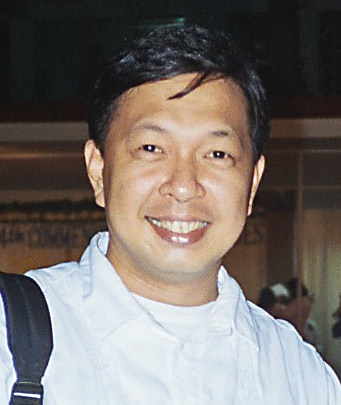
Ferddie's World

Saturday, June 25, 2011

100 Years of La Sallian Education in the Philippines

“Hail, hail, alma mater

Hail to De La Salle…”

I couldn’t keep those words from constantly ringing in my head these last few days.

That’s because last June 16, the whole La Sallian community in the Philippines celebrated its 100th year anniversary in the country. There was at least one pre-anniversary celebration I learned of, but the biggest and grandest one was surely the one held that day at De La Salle University itself at Taft Avenue, Manila.

I decided not to go that Thursday evening despite invitations, telling myself it wasn’t practical to go as it was too far away, and that it was rainy these past few days and that if I was caught in the all evening revelry, I would have surely been late for the important focus group discussion (FGD) I was going to conduct the following day at the Intellectual Property Office of the Philippines on Patent and Trademark Registration relative to a series of Anti-Red Tape Assessment studies our Bureau was undertaking at the Office of the Ombudsman.

A few days after, here I am trying not to regret not being there with my wife, a momentous moment in the academic institution of our late youth. Instead, as personal penance, I gather my energies in blogging a post about De La Salle University in honor of its centennial celebration. After all, La Salle had a dramatic impact on my life. I probably wouldn’t be where I am right now if not for my La Sallian education.

As an undergrad student and later as a college instructor, I saw the good, the bad and even the ugly side of its much acclaimed educational system.

A large part of my beliefs and outlook on life were shaped while I was there. I’ll even go to the extent of saying I found most of my true loves while when I was in La Salle.

Love for the sport

I have always been absorbed with the martial arts even when I was a young child. I grew up trying to imitate Bruce Lee with my blue plastic nunchaku. Then there were the samurai and ninja movies. Then in the mid 80’s came the Karate Kid series. But it was the prodding of an Introduction to Sociology (INTROSO) instructor that formally brought me to the world of Karate-do, particularly in the “way of the empty hand” established by the founder of modern Japanese karate, Gichin Funakoshi and popularized by his son and countless students worldwide – Shotokan through the De La Salle Karate Society (DLSKS) under the auspices of our numerous sensei (instructors) from the Association for the Advancement of Karate-do (AAK). Having played and won on several occasions for my school was definitely a major milestone in my La Sallian experience.

Love of my country

I always thought I was patriotic but ironically it was in an ‘elitist’ school like La Salle that my nationalistic consciousness was awakened and where I got involved in militant student activism. It was in La Salle that I discovered the ‘isms’ of Philippine politics – Imperialism, Feudalism and Bureaucrat Capitalism, immersing myself in leftist ideologies and advancing ‘revolutionary’ changes in society. Later, socio-political realities gave me a better hindsight on things. After the EDSA I uprising, the subsequent alienation of the political left from the masses, the fall of so-called “communist” parties worldwide, and the overriding sentiment of the people towards peaceful electoral means for change significantly altered my radical world view. Now, I continue to be nationalistic, democratic and socialist in my world view minus the sloganeering and the romanticism often associated with the political left. . But all those changes in my later years at school stirred me into channeling my energies to what would be another passion in my life – education.

Love for education

Early on I thought I was going to be an architect, a businessman, then an economist or a historian. Before entering college in 1984, I even considered computer science (it was the fad then plus the perceived high pay). After realizing the numerous math subjects, I settled for a B & E course on Applied Economics. As fate would have it, I felt disenchanted with the thought of being an economist in a capitalistic economy I was much averse to, taking liberal arts subjects before the end of my freshman year, in preparation for my decision to shift, acceding to my natural love for the social sciences and taking up Political Science as my course major, minor in Philosophy. There I academically grew, enough to be later considered as a part time lecturer and subsequently as a full- time instructor in our department.

Work in the academe required higher studies. This in turn led to my equally significant and productive stay at the graduate school of UP - College of Public Administration as College Scholar (CS), Master in Public Administration (MPA) degree holder at the age of 19 and some doctoral units thereafter.

As an educator, I felt the strong camaraderie among my fellow faculty members, the respect and adulation of good and impressionistic students, the scorn of several students I failed, and the ire and lack of support of certain administrative officials due to my convictions and fight for academic freedom. By and large, I loved teaching in DLSU. At the end of the day, it really boils down as to whether as an educator, I felt I was able to impart some knowledge, some learning or some experience that would make my students in the process better persons in our society. If I got that feeling or affirmation, then I knew I earned my pay…and I earned my job and title as a teacher.

Love of my life

My wife and I both took our undergrad courses in this academic institution way back in the 1980s. Odette, one year my senior was a double Liberal Arts degree holder (AB Psychology and Behavioral Science) while I was a Political Science major. She was quite active with her student organization (BEST) while I was active (being an activist) with COSSA – a Student Christian Movement of the Philippines (SCMP) affiliate and the Political Science Society (POLSCI).

Her family was one of the first residents of the GSIS Village in Project 8. We transferred to GSIS Village only in 1988 but I had no recollection of seeing her in the subdivision.

Strangely, we only met when we were already both teachers in our respective departments. It was due to our involvement in handling ORIENT classes for junior DLSU students that got to know each other. We quickly became good friends. In time, that friendship blossomed into true love and the rest they say was history.

I could go on and on with anecdotes, real life experiences, tales that would make you laugh, incidents that would make you cry or angry, tales that would inspire you…and give all of us hope.

I guess I’ve learned to accept my La Sallian experience the way we accept the other areas of our lives – accepting its wholeness, its totality. All with the good, the bad and the ugly. But with the hope that the good it emanates, is what I, along with other products of its educational system should promote, what we should pass on to the next generation of true blooded La Sallites.

I have this uncanny feeling that my involvement with my alma mater has not yet reached its final chapter. Until then and onwards…

“…we’ll fight to keep your glory bright,

And never shall we fail

Hail to thee, our alma mater,

Hail, hail, hail”!

Labels:

Tuesday, May 31, 2011

MRI Blues

Got pain?

For the last two months or so, I have been experiencing increasingly excruciating pain and numbness on my left arm, shoulder and back. Especially this month, there were daily occasions when I couldn’t even do any work with the computer. A few moments with my left hand on the keyboards and a piercing pain strikes my upper left extremities. For countless nights, I couldn’t sleep at all as it would be very painful after a minute or so just laying on my back in bed. I had to always move. The least pain I would feel sleeping face down which in a way relieved the “pressure” on my left shoulder and back.

I finally saw an orthopedic doctor at Capitol Medical Center (CMC) last May 17 with my wife accompanying me. It was a short consultation. The doctor’s diagnosis – cervical spondylosis.

Spondylosis is a medical condition signifying degenerative osteoarthritis of the joints between the centra of the spinal vertebrae and/or neural foraminae. In extreme cases, it may cause pressure on nerve roots with ensuing sensory and/or motor disturbances, such as pain, paresthesia, or muscle weakness in the limbs.

According to Wikipedia:

“When the space between two adjacent vertebrae narrows, compression of a nerve root emerging from the spinal cord may result in radiculopathy (sensory and motor disturbances, such as severe pain in the neck, shoulder, arm, back, and/or leg, accompanied by muscle weakness). Less commonly, direct pressure on the spinal cord (typically in the cervical spine) may result in myelopathy, characterized by global weakness, gait dysfunction, loss of balance, and loss of bowel and/or bladder control. The patient may experience a phenomenon of shocks (paresthesia) in hands and legs because of nerve compression and lack of blood flow. If vertebrae of the neck are involved it is labelled cervical spondylosis. Lower back spondylosis is labeled lumbar spondylosis.”

The doctor told me to have an MRI test which he believes is better than taking a regular X-ray test.

An MRI test. I’ve heard about it and have seen it on movies. But this is one test I haven’t taken.

By definition MRI refers to a magnetic resonance imaging (MRI) scan, a noninvasive method to create detailed pictures of the various parts of the body.

Unlike x-rays and computed tomographic (CT) scans, which use radiation, MRI uses powerful magnets and radio waves. I read somewhere that he magnetic field produced by an MRI is about 10 thousand times greater than the earth's. That’s a powerful set of magnets!

The magnetic field causes hydrogen atoms in the body to align in a certain way (identical to how the needle on a compass moves when you hold it near a magnet). When radio waves are sent toward the lined-up hydrogen atoms, they bounce back, and a computer records the signal. Different kinds of tissues emit back different signals.

There are two general types of MRI machines, the open and closed versions. A closed machine is smaller, has a narrow tube and is said to produce better images than the open type. An open MRI machine on the other hand, is open on three sides, making it more comfortable for the patient. However, the images are limited and are not as good since the magnets do not circle the whole body.


Open MRI machine


Not surprisingly, undergoing an MRI test entails a lot more money than having a regular X-ray test. Capitol Medical Center’s fee of 8,000 pesos for the MRI test I needed seemed to have already worked wonders in my body. I kept on telling my wife that my back has miraculously healed upon hearing the test fee!

Of course the pain didn’t go away. Sooner or later, I knew I had to get it to understand what was happening. It was a good thing that the hospital had a substantial discount for government employees due to their arrangement with GSIS. On the day I had my MRI test (May 27), I only paid 4,570 pesos. If there are medical findings, I could reimburse that amount with my office’s medical welfare fund.

The hospital had the open type MRI machine which I suppose lessened my chances of experiencing claustrophobia. But my MRI test wasn’t the longest 35 minutes of life because of fear of tight spaces. It was primarily because of the pain. I couldn’t move my body even if there was actually considerable space to move because that would ruin the image and we will have to do everything all over again.

A minute or so into the procedure, I was already experiencing piercing pain on my left back and shoulder coupled with widespread numbness over my left arm simply by lying down on my back. I tried to focus my mind on finishing the test, to bear the pain and to finish the test. I prayed a lot. At some point I thought I had already asked the intercession of all the saints in heaven and yet the test continued. It was the LONGEST 35 minutes of my life! I just thank God I was able to finish the test.

I got the results earlier today from Capitol Medical Center. Among the findings were:

· Alignment of my spine was normal

· The heights of the vertebral bodies and the intervertebral disks were well maintained

· The cervicomedullary junction and the spinal cord are normal

· There is no intraspinal or paraspinal mass lesion

I’m no medical doctor but all that pretty much sounds positive. However, there were other “impressions”:

Assymetric disk bulge, C5-C6, causing right-sided foraminal stenosis

Assymetric disk bulge, C6-C7, causing left-sided foraminal stenosis.

It is said that so-called cervical (neck) injuries usually result in full or partial tetraplegia (Quadriplegia). According to the Wikipedia article on spinal cord injury, one’s bodily functions retained, depending on the specific location and severity of trauma:


  • Injuries at the C-1/C-2 levels will often result in loss of breathing, necessitating mechanical ventilators or phrenic nerve pacing.
  • C3 vertebrae and above: Typically results in loss of diaphragm function, necessitating the use of a ventilator for breathing.
  • C4 : Results in significant loss of function at the biceps and shoulders.
  • C5 : Results in potential loss of function at the shoulders and biceps, and complete loss of function at the wrists and hands.
  • C6 : Results in limited wrist control, and complete loss of hand function.
  • C7 and T1 : Results in lack of dexterity in the hands and fingers, but allows for limited use of arms.


It is not only severe trauma that could cause spondylosis. Even simple reasons such as bad posture and other sources of what is termed as “repetitive strain injury” such as driving, traveling and working in front of computers without ergonomic care could also result in spondylosis. In my case, that seems to be the likely suspect.

I don’t know when I will visit the doctor again to show my MRI results. But I expect at the very least, a series of physical therapy sessions coming my way in the near future. One thing is for sure. I’m extra careful with my spine nowadays. I’m extra cautious that I don’t lose my footing on slippery tracks. No back breaking tasks for me unless truly necessary.


As far as the bad posture in front of the computer…now that’s something I still have to work out on.

Labels:

Friday, May 20, 2011

Got my 1st pair of Reading Glasses!


Last weekend, I bought my first pair of prescription glasses from the Ideal Vision branch inside SM Fairview. It was actually reading glasses for my slightly deteriorating eyesight. I have been delaying this purchase for the last year or so for what seems to be inevitable as one grows older. Years of staying up late, reading against the light and not eating enough carrots I guess have finally caught up with me. I’m sure my diabetic condition has a lot to do with it too.

So with the eyeglass prescription I got from my ophthalmologist last January of this year, I sought remedy for my blurring vision.

At the eyeglass shop, the optometrist made me underwent basically the same procedures my ophthalmologist made me go through every visit. They used the phoropter to determine which lenses were best. Even as a kid, I always liked to have my visual acuity tested through Hermann Snellen’s classic letter chart. According to the Dictionary of Visual Science, visual acuity is the “acuteness or clearness of vision which is dependent on the sharpness of the retinal focus within the eye and the sensitivity of the interpretative faculty of the brain.”


According to Wikipedia:

In the term "20/20 vision", the numerator refers to the distance in feet between the subject and the chart. The denominator indicates the size of the letters, specifically it denotes the separation at which the lines that make up those letters would be separated by a visual angle of 1 arc minute, which for the lowest line that is read by an eye with no refractive error (or the errors corrected) is usually 20 feet. The metric equivalent is 6/6 vision where the distance is 6 metres. This means that at 20 feet or 6 metres, a typical human eye, able to separate 1 arc minute, can resolve lines with a spacing of about 1.75mm. 20/20 or 6/6 vision can be considered nominal performance for human distance vision; 20/40 or 6/12 vision can be considered half that acuity for distance vision and 20/10 or 6/3 vision would be twice normal acuity. [2] The 20/x number does not directly relate to the eyeglass prescription required to correct vision, because it does not specify the nature of the problem corrected by the lens, only the resulting performance. Instead an eye exam seeks to find the prescription that will provide at least 20/20 or 6/6 vision.[citation needed]


If I remember it right, the good thing was I still had 20/20 vision. But my view of the chart became much sharper and better defined as a different set of lens were applied to my eyes.

This experience with corrective lenses widely broadened my knowledge with eye vision.

For instance, I realized that the prescription order consisted of all the specifications necessary to make the lens. Prescriptions generally include the power specifications of each lens (for each eye). Lenses come in positive (plus) and negative (minus) powers. Since a positive power lens will magnify an object and a negative power lens will minify it, it is very possible to tell whether a lens is positive or negative by simply looking through them.

Each power specification includes a spherical correction measured in so-called diopters. Convergent powers are positive (e.g., +4.00 D) and condense light to correct for farsightedness or to allow a person to read more comfortably. My eye doctor prescribed at the spherical column of my prescription + 1.50 for both my left (OS – Latin: oculus sinister) and my right (OD – Latin: oculus dexter) eyes. Divergent powers are negative (e.g., −3.75 D) and spread out light to correct for nearsightedness. If neither convergence nor divergence is required in the prescription, "plano" is used to denote a refractive power of zero.

In the late 90’s, I bought a pair of glasses with plano lenses. I just requested that it be UV coated because aside from its trendy look I used it while working in front of the computer. Long term exposure to UV-A radiation could damage the retina while massive exposure to UV-B radiation is said to increase the likelihood of cataracts.

For my reading glasses, my eye doctor prescribed clear, single vision lenses made of plastic material. I’m not sure so sure whether the lenses I got were plastic or glass but they were definitely clear and single vision. Single vision lenses have the same optical focal point or correction over the entire area of the lens. Other lens types include bi-focal, trifocal, progressive, adjustable focus or aspheric.

Another new thing I learned was the meaning of the acronym PD that you would probably see in an eyeglass prescription. PD stands for Pupillary Distance, sometimes also known as Interpupillary Distance (IPD). Basically it is the distance between pupils expressed in millimeters. It is often measured by the use of a pupilometer or by a classic ruler. PD measurements are said to be important in all spectacle dispensing. But I’m wondering why my previous PD was measured at 68 while in my latest prescription it was measured at 67. Does it actually change through the years?

At any rate, I’m now reaping the advantages of superb eyesight wearing my reading glasses when going through those fine print texts. Of course, I don’t wear it when I’m not reading anything close by as the lens was not meant for farther distances say more than a foot away from my eyes.

There is just one other procedure my eye doctor wants me to undergo due to my diabetes – a fluorescein angiogram. But that’s a topic for another post.


For now, I’m just thankful to God for my clearer eyesight!


Labels:

Tuesday, April 26, 2011

Happy 5th year Anniversary, Ferddie’s World!


“Hi everyone! This is my first entry to a web journal that I hope will lead to more wonderful things ahead! I humbly thank God for my life, my family…for everything He has so graciously given me! Now is the time to share it…”


Five years ago, I set out to do what no family member has done so far…to boldly go where no Mendoza kin has gone before…the blogosphere in the infinite confines of Internet space.

The World Wide Web for many of the younger generations has become the final frontier for exploration and discovery.

Cited above was my very first entry in Ferddie’s World, my first ever blogsite.

Five years and four blogsites (still up and running!) after, my enthusiasm for blogging has neither dissipated nor reduced to a simple act of self indulgence. The struggle though continues for me to find the ways and means and the time to write and deliver my posts as timely as possible.

After all, one of the greatest sources of my personal fulfillment in blogging are the times when people (both those you know and those you don’t but read your articles) express their appreciation and/or convey their feelings that they were blessed by what you wrote. Truly, a great part in the joy of writing is in being understood and well-regarded. More importantly, I made it my humble mission to spread the good news of Christ Jesus through blogging, through the Internet.

Certainly, a person need not be always technical or doctrinal in spreading God’s love. Often, everyday stories from ordinary people like me give wondrous testament to His majesty, and love for His most beloved of creations.

Here’s to the next five years of my blogging milieu…Ferddie’s World!

God bless everyone!

Labels:

Friday, February 25, 2011

After 25 years: My memories of the EDSA 1 Revolution

I was there.

After twenty five years, my memory of EDSA has been quite hazy, but not in the same selective amnesia that certain generals have been experiencing concerning anomalous transactions that have transpired less than ten years ago. I describe my recollection of the EDSA 1 revolution as a personal anthology of bits and pieces of places, faces and events from the 22nd to the 25th of that fateful month in our country’s history.

I remember being recalled by the school authorities in De La Salle University (DLSU) from our house to house campaign in the 5th District of Manila for civil disobedience and work stoppage on a specific date later during the month. They urged us to heed the call of then Archbishop Jaime Cardinal Sin to go to EDSA and protect the failed coup plotters from the Reform the Armed Forces Movement (RAM) led by former Colonel Gringo Honasan and Dept. of National Defense (DND) Secretary Juan Ponce Enrile. Then AFP General Fidel Ramos had also decided to join the said group in opposing President Ferdinand Marcos.

I was hesitant to go to EDSA because I didn’t want to help these people who were for years have been associated with the Marcos regime. Now that the dictator’s grasp on power had substantially declined, they were jumping ship. Worse, they had attempted to take power for themselves.

But when I saw the religious and lay people who had arrived there before us, I thought of their safety from the military personnel who were sent by the government to crush the rebellion. There was strength in numbers, and the military I thought would not dare fire on the human barricade lest they wanted an all out civil war. My presence in EDSA was a personal risk I had to take for the country.

I was there.

Scared and a little confused as to how I got in front of the massive military vehicles often described by media men as tanks when it actually looked like armored amphibious personnel carriers. Still, it looked menacing enough that when one shouted that no one among us shall leave until the military withdrew, I feared it was my final ending. The idea of being crushed under a tank wasn’t a pleasing thought at all!

Thankfully, the Marines with their war vehicles left that late afternoon, surely overwhelmed with the ever increasing number of people pouring into EDSA. “War is over!” one Marine soldier shouted as he walked near me towards the direction of Fort Bonifacio. They did return to barracks that night only to return the next day and to be again met with an ever increasing sea of human barricade. People were later tear gassed only to come back with more supporters.

I was there.

At the start, La Sallites converged near Gate Four (4) of Camp Aguinaldo, mixed in with a cross section of Philippine socio-economic classes. EDSA had that effect on people. There was generally no discrimination as people saw other Filipinos as they were, as Filipinos.

Those were dangerous times. Had Marcos agreed to AFP Chief General Fabian Ver’s recommendation to send some fighter planes and bomb the insurgents as well as the civilians, hundreds if not thousands would have lost their lives at EDSA including mine.

Sensing danger, my parents particularly my father refused to allow me to return to EDSA. Being a parent now myself, I knew they were just concerned for my safety, but I was obstinate. We got into a heated argument and my father even threatened to disown me telling me not to come back if I left but I was determined to go back to EDSA. My mother who had a calming effect on us assured me not to worry about my father and his declarations, to just be careful and to come back home.

As the days quickly passed, the dangerous atmosphere turned into a festive one as more and more from the military defected with civilians filling the former Highway 54 as far as the eye can see from the middle of Camps Crame and Aguinaldo. A festive atmosphere, indeed. I can even remember one night walking all the way up to the Cubao area and from an elevated area of EDSA seeing for the first time naked women dancing above the tables of their drinking customers at a local bar called Alibangbang. The country was in a state of deep crisis but it was business as usual for these establishments.

By the evening of the 25th , it was all over. Marcos and his family had been carted away by his former allies in the United States government on exile to Hawaii. The DLSU contingent had been further moved along Ortigas Ave. near the corner area with N. Domingo St. That is where we heard of Marcos flight to the US. A number of us decided to go that very night to Malacanang Palace, the seat of Marcos’ rule for twenty years. We hitched from one vehicle to another, from one place to another until we reached San Miguel in Manila. I had to climb a steel grilled wall to enter the Palace premises. The sight we saw was both a source of joy and disappointment. The liberation of Malacanang Palace was a jubilant sight to see. Unfortunately, many people who stormed the place were in a looting mood, itching to get anything as a souvenir I suppose from the Marcos spoils. You see people bringing out paintings, bed mattresses, machine gun ammunitions magazine, and tons of paper documents that could have further shed light on many concerns. It took some concerned people to make at least some of the looters realize that these things were not for the taking but rather belonged to the Filipino people.

Which brings me to the question, after 25 years from EDSA 1, what has happened?

Many people describe the EDSA event as a miraculous defining moment for the Filipino people. Miraculous in the sense that it could have easily turned into a bloody and ugly conflict but it did not. Defining because it showed the whole world what the nation could achieve with unity of purpose. However, have we really utilized for the common good the gains of EDSA? Or have the future generations forgotten them altogether succumbing to the false promises of progress and development under a reestablished system of oligarchic rule and plutocracy in government. Every Filipino has to answer the abovementioned question himself deep in his heart as we are all party to EDSA’s glorious fulfillment or utmost failure.

If there were two things that I learned from EDSA it is that one, constant vigilance of the people is truly the sacrifice we have to accept for our freedom. We have to learn from history otherwise, the following generations of Filipinos shall be almost bound to repeat each and every mistake of our forefathers. Secondly, the genuine and unwavering work of nation-building ultimately comes from a deep sense of spirituality. Our faith comes into fullness in life through concrete action. Love of God is expressed in love of country and of the poor. Only with true concern for our fellowmen’s welfare shall the aspirations made in EDSA find lasting fruition.

As I remember EDSA today, I constantly remind myself of these learnings. By remembering them well and living my life accordingly, I believe I honor God and those who have sacrificed much so we can enjoy the life and freedoms we Filipinos have now.

Labels: ,

Tuesday, June 02, 2009

My Personal Credo

Finally, I was chosen to be a participant to a program that I had been interested to join for quite some time now. Per OMB Office Order No. 09 – 143 dated April 13, 2009, I attended the Ehem! Aha! Self Check Seminar on April 15 held at one of the training rooms of the Office of the Ombudsman (OMB).


A little bit of history. The OMB and the Philippine Province of the Society of Jesus signed a Memorandum of Agreement (MOA) and createda Technical Working Group (TWG) to implement the Ehem! Aha! anti-corruption scheme. Ehem! was a program developed by the Jesuit Fathers rooted on cultural sensitivity and reflection.


There are four general modules - 1) Experiencing Corruption, 2) Analyzing Causes and Consequences of Corruption, 3) Reflections on Corruption and 4) Action Planning.


I couldn’t finish the seminar course due to the usual intervening assignments over and above my usual tasks. On April 16 I was given instruction to represent the office and participate in a high–level consultative meeting between government officials led by the National Economic Development Authority (NEDA) and representatives from the Japanese Embassy and the Japan International Cooperation Agency (JICA) held at the NEDA main office.


It would take me more than another month to finish the seminar’s 3rd and 4th modules with another batch of OMB employees. So on
May 21, 2009, I was able to finish the course and earn my certificate of participation.


Among the various activities that really made a strong impression on me was the formulation of our individual credos. The personal credo was to remind us of our realizations and commitments born out of this endeavor against corruption.


I’d like to share the credo I wrote during the seminar with all the netizens of the cyber world. May it inspire others to take action and contribute in any way, big or small to the establishment of a new Filipino culture of integrity and zero tolerance for corruption.


My Personal Credo


I am a child of God.

A being made in His image and likeness,

Entrusted as steward of all His creation.

And yet through my transgressions,

I have exiled myself from His heavenly kingdom.

I thank Him for the gift of life and salvation

through Christ Jesus.

Despite my unworthiness and brokenness,

Your forgiveness and mercy has again cleansed me

and made me white as snow.

By God’s grace, I will strive to follow His precepts…

The Lord’s will be done…not mine.

His blessings I will share with those in need.

My time, talent and treasure,

will I use for His greater glory!

I am thankful…

…for I am a child of God!


Labels:

Wednesday, January 07, 2009

Ten lessons learned in 2008


1. That the dream of an Eraserheads concert was not only possible but realizable.

August 30, 2008 will go down as a major milestone in Pinoy rock music history. What many thought would never happen again…happened. For the first time in six years, members of the band Eraserheads reunited to perform before an ecstatic crowd at the open grounds of the Bonifacio Global City.

My two older kids and I who all grew up on their music in the 90’s weren’t so lucky to have been there at that historic moment. I had to settle for the CD of the concert which eventually was released to the public. The way they played, sang and performed that night, made me feel they never really left at all.

Too bad, the physical and emotional condition of Ely Buendia took its toll on the band’s former vocalist who was rushed to the hospital that night, abruptly ending the reunion concert. Raymund Marasigan promised fans another E-heads show “as soon as possible”.

I’m keeping my fingers crossed on this one.


2. As always in traditional politics, no one has permanent friends, only permanent interests (the coup on the Senate presidency of Manny Villar and the ouster of Jose De Venecia from the House speakership).

I learned this one even when I was still a “revolutionary” college student activist from De La Salle University fighting the Marcos regime often at the streets of Manila and at the foot of the bridge at Mendiola.


3. Polar caps are melting and global warming and climate change are REAL!

I felt a strong sense of urgency regarding the protection of the environment after watching a VCD of Al Gore’s documentary “An Inconvenient Truth” last year. It’s not too late but this generation will likely determine the irreversibility of what we have done to Mother Nature.

I’ve tried to do my part, small things really like segregating our household waste and selling off recyclable materials or pulling the plug of unused electrical appliances. We’ve tried to grow vegetable plants in our small plot of land using organic fertilizer like the used coffee grounds I get for free from the local Starbucks Coffee outlet.

We have to preserve, conserve and protect what God has given us as His stewards. Unless He graciously gives us another habitable planet to go to and start anew (the nearest star system to us I believe is the Alpha Centauri – approx. 4.5 light years away), it’s the only one we got!


4. UBUNTU - Zulu maxim umuntu ngumuntu ngabantu (“a person is a person through (other) persons”)

A traditional African concept is a humanist philosophy that defines an individual in terms of his or her several relationships with other people.

I first heard about ubuntu as promoted by Boston Celtics coach Doc Rivers to his players. The Celtics, champions of the 2008 NBA Finals, have been trying to live out its philosophy, even chanting the term whenever they break huddles since the start of the 2007-2008 season.


5. If you’re diabetic, take your medicines.

I was actually prescribed Metformin as early as in 2007 for my diabetes but it was last year that I really took my medicine quite seriously, taking another prescribed drug Glimepiride more regularly. At first, it was just a question of economics, not buying the medicines because of its high cost. Later, over and above the medical reimbursements provided by our office, I realized that there was really no going around it. I had to take my medicines if only to delay if not prevent the complications it unfortunately carries with it. Hopefully, there may still come a time that I can simply rely on a good diet and exercise to manage such ailment. Until that time or the doctor changes my prescription, it’s a 2 milligram tablet per day for me.


6. God works in mysterious ways.

Mid-year, I was asked to serve as acting Chapter Head of North B-1 C (Sta. Lucia chapter). For how long does He want me there? At present, I really don’t know…but some leaders have a coined term for it – “pansamantagal” (temporary for an indefinite long period of time)

In the end I try to follow God’s will, not mine.


7. The global financial crisis is basically due to greed.

From my point of view a number of people tried to get more and more money from “nothing” (not from essential products but from unwise and “too good to be true investments) – then the bubble burst.


8. While we’re at the subject matter of greed, don’t just moderate it (ZTE-NBN 16 billion peso scam) but avoid occasions of sin by proactively building foundations for good governance (improvement of quarrying operations in Pampanga under Gov. Ed Panlilio’s administration).


9. Not everything cheaper is better. (From melamine tainted products and substandard items from China)

Darn! I used to eat those Snicker caramel nougat bars I bought from a Shell Select mini-grocery in Mindanao Ave. And it wasn’t even cheap to start with! The Bureau of Food and Drug I think eventually cleared the product as melamine-free though it doesn’t really provide enough comfort.


10.……and yes, breast milk is still best for babies.


Labels:

Friday, January 04, 2008

What's in a name?

I “Google”- searched my formal Christian name once and in 0.19 seconds I got 720,000 hits.


On top of the list, is a renowned pediatrician, faculty member and researcher in Stanford University. Present Chief of the General Pediatrics Division and Associate Dean of Minority Advising and Programs in Stanford University’s School of Medicine, my namesake was listed by the Hispanic Business Magazine as one of the 100 Most Influential Hispanics in the United States in 2002. At age 53, Dr. Mendoza continues to be actively involved in community service particularly to children of new immigrants and the underserved.


The second person was a Catholic Bishop (now deceased) named Fernando Mendoza Gonzalez. He was born in Spain in 1549, became a member of the Society of Jesus (the Jesuits) by the age of 18 and ordained a bishop at the age of 60. He served the people of Cuzco, Peru as bishop for nearly 9 years before he died in 1618.


Another namesake on the list is a South American Post Doctoral Researcher based in the School of Agriculture, Food Science & Veterinary Medicine in Dublin, Ireland. He currently works in Biosystems Engineering, UCD, investigating the quality of pre-sliced ham surfaces using computerized digital imaging techniques. (Food never looked so exciting!)


One namesake wrote an article on the International Journal of Speleology about the “La Cueva del Tesoro” (Treasure Cave) in the municipality of Rincòn de la Victoria, 10 kilometers from the city of Malaga, Spain. Speleology by the way is the study and exploration of caves.


A fifth was a veteran Mexican actor whose work in films started from the late 1930s to the 1970s including a part in the movie, “Emiliano Zapata” who won three major awards in the Premios ACE in 1972.


There’s this drummer who gave a wonderful musical performance at YouTube (Fernando Mendoza's Drum Duet). Interestingly, my eldest son, Fernando Jr. also brilliantly plays the drums (and guitars) and is a member of a high school band. I’m not sure if it’s the same musician but a certain Fernando Mendoza and his Bahia – Percussion Band has 6 musical tracks in a CD album featuring various artists titled “Latin Nights” released back in 2002.


The list of professionals bearing the same name as mine goes on and on.


“Fernando”, my first name is Spanish by origin and is used in English and Spanish speaking countries. Its meaning ranges from “adventurer” or “bold voyager” to “intelligent” to “brave”. It has three main variant forms: Ferdinand (Old German), Fernand (French) and Hernando (Spanish).


“Fernando” continues to be a very popular name. Websites on baby names list “Fernando” has consistently been ranked among the top 200 names for boys in the U.S. particularly from the 1990s to the present time.


According to babynamesworld.com:

“Fernando is in the top 100 of the four American states that border Mexico
(California, New Mexico, Arizona, and Texas), as well as being the 28th most
popular name in Chile in 2006, and the 51st most popular in Spain.”


I am honored by the achievements of those who were born before me and at the same time humbled by my own seemingly insignificant contributions to mankind. Nonetheless, I still have my whole life before me. What a person does in the next ten, twenty, thirty years of his life makes all the difference.

In the end, it’s not about me so much as it is about God whom I believe is the very reason for our existence.

What’s in a name then? Per se, nothing much. But a life lived meaningfully for God brings honor to Him and to the person through the name that he carries.


Happy new year, everyone!

May you carry your name proudly for God!


Labels: