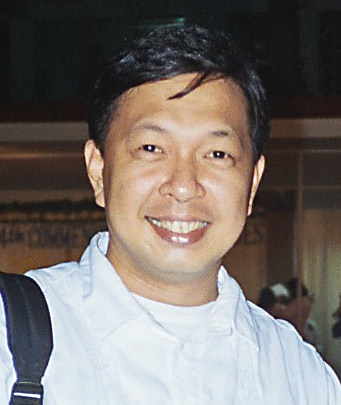
Ferddie's World

Friday, February 25, 2011

After 25 years: My memories of the EDSA 1 Revolution

I was there.

After twenty five years, my memory of EDSA has been quite hazy, but not in the same selective amnesia that certain generals have been experiencing concerning anomalous transactions that have transpired less than ten years ago. I describe my recollection of the EDSA 1 revolution as a personal anthology of bits and pieces of places, faces and events from the 22nd to the 25th of that fateful month in our country’s history.

I remember being recalled by the school authorities in De La Salle University (DLSU) from our house to house campaign in the 5th District of Manila for civil disobedience and work stoppage on a specific date later during the month. They urged us to heed the call of then Archbishop Jaime Cardinal Sin to go to EDSA and protect the failed coup plotters from the Reform the Armed Forces Movement (RAM) led by former Colonel Gringo Honasan and Dept. of National Defense (DND) Secretary Juan Ponce Enrile. Then AFP General Fidel Ramos had also decided to join the said group in opposing President Ferdinand Marcos.

I was hesitant to go to EDSA because I didn’t want to help these people who were for years have been associated with the Marcos regime. Now that the dictator’s grasp on power had substantially declined, they were jumping ship. Worse, they had attempted to take power for themselves.

But when I saw the religious and lay people who had arrived there before us, I thought of their safety from the military personnel who were sent by the government to crush the rebellion. There was strength in numbers, and the military I thought would not dare fire on the human barricade lest they wanted an all out civil war. My presence in EDSA was a personal risk I had to take for the country.

I was there.

Scared and a little confused as to how I got in front of the massive military vehicles often described by media men as tanks when it actually looked like armored amphibious personnel carriers. Still, it looked menacing enough that when one shouted that no one among us shall leave until the military withdrew, I feared it was my final ending. The idea of being crushed under a tank wasn’t a pleasing thought at all!

Thankfully, the Marines with their war vehicles left that late afternoon, surely overwhelmed with the ever increasing number of people pouring into EDSA. “War is over!” one Marine soldier shouted as he walked near me towards the direction of Fort Bonifacio. They did return to barracks that night only to return the next day and to be again met with an ever increasing sea of human barricade. People were later tear gassed only to come back with more supporters.

I was there.

At the start, La Sallites converged near Gate Four (4) of Camp Aguinaldo, mixed in with a cross section of Philippine socio-economic classes. EDSA had that effect on people. There was generally no discrimination as people saw other Filipinos as they were, as Filipinos.

Those were dangerous times. Had Marcos agreed to AFP Chief General Fabian Ver’s recommendation to send some fighter planes and bomb the insurgents as well as the civilians, hundreds if not thousands would have lost their lives at EDSA including mine.

Sensing danger, my parents particularly my father refused to allow me to return to EDSA. Being a parent now myself, I knew they were just concerned for my safety, but I was obstinate. We got into a heated argument and my father even threatened to disown me telling me not to come back if I left but I was determined to go back to EDSA. My mother who had a calming effect on us assured me not to worry about my father and his declarations, to just be careful and to come back home.

As the days quickly passed, the dangerous atmosphere turned into a festive one as more and more from the military defected with civilians filling the former Highway 54 as far as the eye can see from the middle of Camps Crame and Aguinaldo. A festive atmosphere, indeed. I can even remember one night walking all the way up to the Cubao area and from an elevated area of EDSA seeing for the first time naked women dancing above the tables of their drinking customers at a local bar called Alibangbang. The country was in a state of deep crisis but it was business as usual for these establishments.

By the evening of the 25th , it was all over. Marcos and his family had been carted away by his former allies in the United States government on exile to Hawaii. The DLSU contingent had been further moved along Ortigas Ave. near the corner area with N. Domingo St. That is where we heard of Marcos flight to the US. A number of us decided to go that very night to Malacanang Palace, the seat of Marcos’ rule for twenty years. We hitched from one vehicle to another, from one place to another until we reached San Miguel in Manila. I had to climb a steel grilled wall to enter the Palace premises. The sight we saw was both a source of joy and disappointment. The liberation of Malacanang Palace was a jubilant sight to see. Unfortunately, many people who stormed the place were in a looting mood, itching to get anything as a souvenir I suppose from the Marcos spoils. You see people bringing out paintings, bed mattresses, machine gun ammunitions magazine, and tons of paper documents that could have further shed light on many concerns. It took some concerned people to make at least some of the looters realize that these things were not for the taking but rather belonged to the Filipino people.

Which brings me to the question, after 25 years from EDSA 1, what has happened?

Many people describe the EDSA event as a miraculous defining moment for the Filipino people. Miraculous in the sense that it could have easily turned into a bloody and ugly conflict but it did not. Defining because it showed the whole world what the nation could achieve with unity of purpose. However, have we really utilized for the common good the gains of EDSA? Or have the future generations forgotten them altogether succumbing to the false promises of progress and development under a reestablished system of oligarchic rule and plutocracy in government. Every Filipino has to answer the abovementioned question himself deep in his heart as we are all party to EDSA’s glorious fulfillment or utmost failure.

If there were two things that I learned from EDSA it is that one, constant vigilance of the people is truly the sacrifice we have to accept for our freedom. We have to learn from history otherwise, the following generations of Filipinos shall be almost bound to repeat each and every mistake of our forefathers. Secondly, the genuine and unwavering work of nation-building ultimately comes from a deep sense of spirituality. Our faith comes into fullness in life through concrete action. Love of God is expressed in love of country and of the poor. Only with true concern for our fellowmen’s welfare shall the aspirations made in EDSA find lasting fruition.

As I remember EDSA today, I constantly remind myself of these learnings. By remembering them well and living my life accordingly, I believe I honor God and those who have sacrificed much so we can enjoy the life and freedoms we Filipinos have now.

Labels: ,

Wednesday, May 12, 2010

Post-election ramblings


I didn’t get to vote.

Despite what I believe was our best effort, my wife and I didn’t get the chance to exercise our constitutional right to cast our vote on whom we have chosen to lead our country.

We arrived along with our youngest child and only daughter Faith to the usual polling place at the GSIS Village in Project 8, from our Fairview residence. As registered voters in the 1st District of Quezon City, we came to this familiar place a covered basketball court beside the relatively newly installed Holy Family Parish Church thinking the first automated elections would make things less difficult for the ordinary voter.

I was wrong.

What welcomed us was a sea of humanity soaked in sweat and soaring humidity. From my estimate, around 6-7 polling precincts were grouped into clusters which all had one single line for all incoming voters. I estimate there were at least seven long lines that didn’t move. Imagine a scenario of around a hundred people in front of you in a line among many lines that literally didn’t move.

At some point I decided to bring my wife and daughter to a nearby shopping mall to rest, eat lunch and bid our sweet time for the lines at the very least shorten and the people to somewhat dwindle.

Again, I was wrong.

After hours of wandering around the mall, buying a couple of DVDs and even an unplanned purchase of a LG DVD player, I was simply aghast at the scene we went back to at the covered court.

The lines have not receded at all. Worse, some like our line were even longer when we left them! My frustration grew as I again queued hoping they would move even at a snail’s pace.

Frustratingly, I was wrong a third time.

I got the chance to talk to Arsenio, a cousin who lived nearby my parents’ home in the village. He was in the same line I was, still quite a distance from the middle part of the said line. He talked about a couple of PCOS machines, those much controversial ballot counting electronic equipment bogging down, which probably exacerbated the controlled subtle disorder of this voting exercise.

At some time after four in the afternoon, the line not even budging an inch, with much regret and disappointment, I decided to call it quits. I had asked my wife that we just went back home. Equally exasperated with the situation, she immediately concurred.

Sad and tired, we went back to our Fairview abode. There I had to console myself with the news that generally speaking, elections were peaceful and orderly in many parts of the country. Thankfully, the voice of the vast majority was heard and not disenfranchised as my wife and I were.

Days after the momentous elections, I’m still much saddened by the fact that I didn’t get to vote.

I do hope that the concerned Commission on Elections (COMELEC) officials particularly in our voting area will seriously consider physically reconfiguring the polling precincts to make it more efficient. For one, the covered basketball court cannot accommodate the more than 5,000 and growing voting population assigned to these precincts now and more so in future elections especially in the light of Filipino voters’ large turn-outs in our country.

Labels:

Wednesday, May 05, 2010

I’ll vote for these electoral candidates!

For President: John Carlos de los Reyes (Ang Kapatiran Party)

For Vice President: Perfecto Yasay (Bangon Pilipinas)

For Senator:

Bautista, Martin (Liberal Party)


Biazon, Rufino (Liberal Party)


Imbong, Jo (Ang Kapatiran Party)


Lacson, Alex (Liberal Party)


Paredes, Zosimo (Ang Kapatiran Party)


Riňoza-Plazo, Grace (Ang Kapatiran Party)


Roco, Sonia (Liberal Party)


Sison, Adrian (Ang Kapatiran Party)


Tamayo, Reginald (Ang Kapatiran Party)


Tarrazona, Hector (Ang Kapatiran Party)


Tinsay, Alex (Bangon Pilipinas)


Valdehuesa, Manny (Ang Kapatiran Party)


PARTY LIST CIBAC


I am sharing my national elections wish list for all blog readers to read and for the Filipino voters to consider on May 10.

I have tried diligently to know the most I can about the running candidates’ profile, character, track record and platform of action. More importantly, I have sought the guidance of the Lord to discern deserving candidates for these forthcoming elections.

It’s not a perfect list. The people in this list are not perfect. Like everyone, they have they own frailties, mistakes and struggles in life. Yet, I believe they comprise the best combination of national candidates whose advocacies and beliefs are the most similar to mine. Equally significant, I also believe that with their personal integrity and reputation, they are among the most credible, trusted and respected by the people from the current lot of aspirants seeking public office.

May the good Lord bless their respective candidacies with victory on the upcoming polls!

Labels:

Friday, April 30, 2010

10 Traits of a Righteous Leader


“When the righteous are in authority, the people rejoice;
but when the wicked rule, the people groan”.

Proverbs 29:2


The synchronized national and local elections are just around the corner.

While a vast majority of Filipinos at this point in time have more or less decided on whom to vote at least for the highest government positions in the land, it is always worthwhile to evaluate our basis for choosing our candidates for public office.

Not so long ago, the Philippine Bible Society (PBS) and the Parish Pastoral Council for Responsible Voting (PPCRV) along with other faith-based organizations came out with a leaflet written in the local (Tagalog) dialect entitled “Sino ang dapat iboto sa eleksyon 2010” (Who should we vote in the 2010 elections). It talked about the importance of one’s voice and called for every voter’s active and responsible exercise of the right to suffrage.

Drawing wisdom from the Holy Scriptures, the brochure also laid out ten (10) traits or qualities of a righteous leader from a biblical perspective. I don‘t know if the PBS and PPCRV also came out with an English version of this leaflet. I thought it would be my humble contribution to their noble advocacy to come out with an appropriate English translation of these ten guidelines for the benefit of blog readers who seek deeper raison d'être for choosing the country’s leaders from among the various candidates.

It is my prayer that blog readers who peruse these traits with the guidance of the Holy Spirit, shall be empowered to discern and select deserving leaders for public service.


10 Traits of a Righteous Leader

1. Fear of the Lord. His life shows obedience to Biblical teachings.
(2 Samuel 23:3-4)

2. Concern and love for our country. Is he truly a Filipino “in mind, in his words and actions?”
(Deuteronomy 17:15)

3. Ability to lead. Does he have the ability to perform the responsibilities entrusted to him?
(Genesis 41:37-41)

4. Good steward of his family. Faithful to his spouse and children, slave to no vice, has high moral standards.
(1Timothy 3:4)

5. Integrity. Cannot be bribed, and truthful in his statements.
(Deuteronomy 6:18-19)

6. Hardworking. Spends his time in performing his responsibilities.
(Romans 12:11)

7. Upright. Does not embezzle from the people and is not mixed up in corruption.
(Psalms 89:14)

8. Not greedy. Will he enrich himself through wrongful means? Will he use his position to enrich himself?
(Proverbs 29:4)

9. Faithful to his promises. True to his word, does what he promises to do. Has the ability to carry out what is right. Has the inner strength and humility to admit one’s wrongdoing and rectify them.
(Proverbs 25:14)

10. Impartial. Reliably fair in rendering any decision.
(Proverbs 31:8-9)

Labels:

Friday, January 22, 2010

Cab Talkin’

Taxi cab drivers worldwide are a curious lot.

Every time I hail a taxi cab you get to meet drivers with all sorts of personality creed and religion.

From the most pious to the proselytizer, from the silent to the most talkative, from the courteous to the down right obnoxious, there is always one that you will pleasantly or unpleasantly encounter.

Statisticians may argue otherwise, but I will postulate that they constitute a microcosm of a country’s working masses. Politicians will do well to learn the public pulse from them without the expensive costs of national surveys.

Rightly or wrongly, taxi drivers in many cities are notorious for their outrageous driving but you gotta love the conversations!

Take the case of ‘Manong’ whose taxi I hailed just yesterday on my way home from work. As we went through the traffic of Quezon Avenue approached the elliptical road around the Quezon Memorial Circle, he started talking on how the government should already prepare plans to address the growing volume of vehicles in the metropolitan area.

Evidently a fan of the late President Marcos, he went on to cite the various achievements of the former dictator in the area of transportation and public works, on how an experience of worsening traffic in Thailand while attending an ASEAN summit prompted Marcos to direct his officials to prepare plans to address anticipated heavier traffic conditions in our own country. This led to the construction of mass urban transport systems like the Light Rail Transit (LRT) in Manila. Its success according to Manong led to other planned routes across Metro Manila like one transit going all the way to Antipolo and another to Sapang Palay, etc., seven transit railways all in all.

According to Manong, he knew what he was talking about since he was part of the construction team for this massive public work projects. Taking his word for it, I had no reason to doubt the authenticity of his claims especially brcause the formulation of these plans made general sense with today’s traffic and increasing urban population.

As we traversed the long stretch of Commonwealth Avenue he also mentioned the good old days of the Metro Manila Transit, those blue and not crowded air-conditioned buses that shuttled commuters on time to work from and to various points in Metro Manila. He also told of passenger white Ford Fierras (which I had no personal recollection) that were allowed to shuttle riders in the metropolis and were not considered colorum.

Then, the Cory administration came, which according to Manong changed all those initiatives. He blames Cory’s former Transportation Secretary and Executive Secretary Oca Orbos for today’s traffic woes with the liberalization of second hand vehicles and spare parts, the entry of Chinese and Korean made cars and the entry of right hand vehicles and trailer trucks picking up container vans directly from the port area rather than using the national railway system.

He even theorized that Orbos almost became the next President if not for the mistakes he made later during his meteoric stint in Malacanang, which according to him, gave Fidel Ramos the opportunity to ascend into power.

By this time, I had to cut our interesting political discourse to make a quick stop to the Pan de Manila shop in Fairview and buy some of their cool stuff.

The presence of pugon (earthenware and brick oven) cooked tasty Pan de sal probably impelled Manong to shift the discussion to food. With certainty he declared that the best tasting pan de sal comes from Casa Marcos (was the name just a coincidence?) formerly in Greenhills but has now moved to a place somewhere in Sct. Tobias. He attributed the superior taste of Casa Marcos pan de sal to the sole use of “trigo” (wheat) without any additives AND the use of “bakawan” (mangrove tree fire wood). He relates how he had learned the trade from his father who was a baker in Davao and that had he not gallivanted into the wrong path may have eventually taken over his father’s bakery business.

Upon reaching the streets of West Fairview, Manong proudly talked about his relatively good health considering he has reached the age of 70 and this longevity he ascribes to a regular food regimen of fish. A native of Mindanao, he ate a lot of fresh fish and had a particular liking of “GG” or galungong which way back then was the staple fish of the masses but whose price for the last two decades or so, has been quite restrictive.

I enjoyed this particular conversation all the way to the time I alighted in front of our home. I didn’t share his obvious political preferences but he did have some insights worth bearing in mind. Cab talkin’ is a good way of easing through the heavy traffic and you actually learn a lot in the process.

Cab drivers are a curious lot without a doubt. I should know…my father used to be one.

For a good portion of our lives growing up, my father earned a living driving a taxicab. He owned one (which eventually became two) and in it he made and compiled his own unique one thousand and one stories to tell passengers and family members alike.

Most of the time, he used to line up in hotels particularly at the Regent Hotel in Manila. Because he was friendly and honest a lot of foreign tourists befriended him, going out of their way to meet us, giving us gifts and even writing to us long after they left the country. Some, who had the opportunity to return, looked for him from among the hotel taxi cab drivers. He enjoyed what he was doing and my father could have easily passed as a reliable tourist guide of the DOT. Now retired, he still recalls many of these stories to us and to anyone who would care to listen.

One of my favorites was when he told us of this time that one of his drivers bought a bootleg cassette tape of Elvis Presley from a roving Muslim trader near Roxas Blvd. The said driver had the good sense of playing the tape in our taxi’s cassette player immediately before the trader could go far away beyond their reach. True enough, there was a problem as it appeared that the tape was a blank one devoid of Presley songs. The driver called back the trader to complain about not hearing Presley sing while playing the tape. The trader tactfully replied by saying “Huwag kayong mag-alala, napagod lang siguro si Elvis sa pagkanta. Hintayin nyo lang, maya-maya lang babalik na siya!” (Don’t you worry, Elvis probably just got tired of singing. Just wait for a while and soon he’ll be back!) :]


Here’s to your fair share of pleasant taxicab conversations…may God bless us all!


Labels: , ,

Wednesday, January 20, 2010

Help push for the cancellation of Haiti’s foreign debt!


We all know of the great tragedy that has befallen the people of Haiti. Thousands have died included several Flilipinos, with thousands more homeless and in need of basic food, shelter and financial assistance.


As an advocate of the worldwide One.org campaign, I believe that poverty in Third World countries could be substantially reduced if not eradicated, if several unjust economic policies are structurally altered to be fair to all parties. One such policy is with regard to debt servicing. Third World countries are caught in an endless cycle of interest payments on loans which have mostly favored the few rich and/or siphoned by the corrupt.


Aside from the massive humanitarian assistance it now requires, Haiti’s long term recovery can be hastened and development sustained through cancellation of its foreign debt primarily to international financial institutions.


I signed One.org’s worldwide petition callling for the cancellation of Haiti’s debt to major international creditors to give the country a substantial amount of economic relief and a chance to again grow and develop.


Below is a copy of the sample letter from which you may also cut and paste to sent to friends for support. Please sign the petition and send the letter to your friends and relatives!


God bless you and the people of Haiti!


Subject: Take action and help the people of Haiti


Hi,

Like millions of people around the world I've been shocked by the terrible events in Haiti.

Only now is the true scale of the disaster emerging. Reports now suggest more than 75,000 people may have died, with hundreds of thousands made homeless.

The work ahead to recover from this tragedy is immense. So here's our goal: $1 billion for Haiti. That's how much Haiti owes to the International Monetary Fund, the Inter-American Development Bank, and a handful of others.

Sign the petition below to ask Haiti's creditors to act quickly and cancel Haiti's debts:

http://one.org/international/actnow/haiti/index.html?rc=haitipaste

As Haiti begins to rebuild we can help by lifting this debt.Together as ONE we can make a difference!

Thanks!


Labels:

Tuesday, November 17, 2009

U.N. Climate Change Conference: Bringing hope to Copenhagen

From December 7 to 18 of this year, a historic and crucial United Nations Climate Change Conference among the world’s top leaders will be held in Copenhagen, Denmark.

The world’s fate may well hang in the balance at this conference as our world leaders shall determine how we as a global community will respond to the threats posed by global warming which in turn, effect severe climate changes.

I urge all blog readers to join my cause in bringing hope to the important Copenhagen meeting.

Let’s turn Copenhagen into Hopenhagen!

Become a citizen at http://www.hopenhagen.org/ and sign the Climate Petition at this website.

Also join organizations like 350.org and let the world leaders like US President Barack Obama feel the heat to craft “a fair, ambitious, and binding international climate treaty” in Copenhagen and back in their respective countries, pass and implement sound and significant climate policies enough to reduce carbon dioxide in our atmosphere below the critical 350ppm safe upper limit. One concrete way is to join organization’s massive weekend of action and candlelight vigils during the UN Conference.

Let’s all do our share in protecting our planet…the only home we’ve got.


Addendum: Help stop double counting at Copenhagen

In relation to the Copenhagen conference…..

I just signed a petition to Danish Prime Minister Lars Løkke Rasmussen, who will be hosting the Copenhagen climate negotiations in December.

Many leaders are promising to help people living in extreme poverty adapt to the effects of climate change. This sounds great, but unfortunately, on closer examination, it turns out most of this money could be double counted - it's money that has already been promised as development aid. This double counting is dangerous as it undermines both sustainable international development and a good global deal on clime change. It needs to be exposed and stopped.

As host of the Copenhagen talks, Mr. Rasmussen is one of the people best placed to make this happen.

Please join me in taking action here:

http://one.org/international/actnow/copenhagen/index.html?rc=copenhagenpaste

Together as ONE we can make a difference!

Thanks!

Labels: ,

Tuesday, September 01, 2009

My Mother's Birthday is National Heroes Day! (in 2010)

My family with my Papa & birthday celebrant Mama!


Heroes are often the most ordinary of men.
Henry David Thoreau


My mother’s birthday is National Heroes Day…if it was the year 2010.

National Heroes Day used to be observed every last Sunday of August in the Philippines. This commemoration was pursuant to Republic Act No. 3827 which was enacted into law way back in October 28, 1931. The national holiday honors all Philippine heroes including the nameless, faceless ones whose actions contributed into the development of our nation and country and the defense of its freedom and democracy.

Its date of commemoration was moved to the last Monday of August as provided for in Republic Act No. 9492, dated July 24, 2007, amending Section 26 of Chapter 7, Book I of Executive Order No. 292, otherwise known as the Administrative Code of 1987. The said amendments stated certain days (specific or movable) as special or regular holidays and provided that these holidays, except those which are religious in nature are moved to the nearest Monday unless otherwise modified by law, order or proclamation.

That’s why National Heroes Day fell on my sister’s birthday, August 25 last 2008, was observed this year last Aug. 31, and as announced in Presidential Proclamation No. 1841 shall be celebrated on August 30 in 2010.

Apparently, the objective of moving the dates of these regular and special non-working holidays is to strengthen family ties through longer weekends as well as promote local tourism in line with the Arroyo government’s idea of holiday economics. That is of course on the assumption that family members do spend these long weekends together and that during these times of economic crises, majority of Filipino families actually have the disposable income to roam the countryside.

Interestingly, I read the following quotation from a related blog post concerning national heroes:

“No law, executive order or proclamation has been enacted or issued officially proclaiming any Filipino historical figure as a national hero…Even Jose Rizal, considered as the greatest among the Filipino heroes, was not explicitly proclaimed as a national hero.”

Reference and Research Bureau, “Selection and Proclamation of National Heroes and Laws Honoring Filipino Historical Figures” (2003)


If so, it begs the question, which among our known heroes are considered ‘national heroes’? Who declared and how was Jose Rizal chosen as THE national hero? Was it the imperialistic Americans who chose him, a reformist over a revolutionary figure like Andres Bonifacio, thus effectively channeling the peoples’ national psyche towards peaceful reforms over a radical overthrow of their colonial government?

Worse, Filipinos according to writer Alejandro R. Roces seem to “have very little historical consciousness” to start with.

In Roces’ column, ROSES & THORNS (Philippine Star) dated August 26, 2008 he wrote:

“For most of us, the important thing is not what these heroes did in the past. It is that we did not have to go to work. The historical event is totally inconsequential. And its only effect on the nation is that we lose a day’s work.”

Filipinos are often pejoratively described as too “forgiving” and “forgetful”. We “forgive” and “forget” the sinners and their sins of the past, those who acts have brought shame and destruction to our country.

Unmindful of these things, we are doomed as a people to commit the same mistakes. Likewise, we equally forget to honor the heroic efforts of our nobler countrymen who have brought pride and hope to our people.

Nevertheless, I share in Roces’ observation that “disappointing as our situation may be, our country is not bereft of acts of heroism even in this day and age.”

Modern day heroes like the faceless volunteers who magnanimously share their time, talent and treasures for Gawad Kalinga (GK) programs and projects in an effort to help our fellow countrymen regain their self respect and remove abject poverty from our land.

I remember of a story of a volunteer in Mindanao who was weeping while helping out in the construction of a GK house. When asked why she was crying she narrated that at that same day she was helping build the home of another person (whom she probably didn’t even knew), her own home was being demolished!

Such a sad story…but it was also a story of great courage and of selfless love!

Roces quoted Felix Adler, an American-German author who defined a hero as “one who kindles a great light in the world, who sets up blazing torches in the dark streets of life for men to see by.”

As Henry David Thoreau believes even the most common of men can be a hero and kindle that great light in his or her own humble way for others to see and guided.

I agree with Roces’ call for Filipinos to be ‘heroes’ ourselves. To do our share of nation building that others may be inspired to do the same and ensure that the sacrifices of our heroes past shall not be in vain.

That thought brings me back to one of the ‘heroes’ in my life – my mother.

Like many loving mothers, my mama has been and continues to be a source of inspiration and guidance, through her example of modest living and countless sacrifices in life.

Last August 30, we celebrated her 76th birthday in my parents’ home in Project 8. While National Heroes Day may not always coincide with her birthday every year, she will always be a true hero in my heart.


Eric and his family - Phoebe and daughter Rainbow arrives


The best of cousins: Rainbow and 'Ate" Faith


Delectable Oreo-laced chocolate based cake for Lola Vi!


Lola Vi gets ready to blow her cake’s candle as Faith joyfully anticipates


Did you make a wish Lola Vi?


Birthday photo ops!


Lola Vi with some of her 'apos' (grandchildren): Joshua, Rainbow and Faith


My parents: Happy birthday, Ma!


I don’t personally know of any hero of national stature. But I do know of many ordinary folks, unsung heroes that have equally devoted their lives for one noble cause or another.

In this post, I honor one of them.

For her unselfish love, caring for us and giving us the prime years of her life, I thank her. May God grant her many more years of peace and happiness here on earth with us her family.

To one of the greatest heroes of my life, happy birthday, Ma!


Labels: ,

Monday, August 03, 2009

MAKE AUGUST 1 – CORAZON AQUINO DAY !

The whole nation expresses grief for the passing away of former President Corazon C. Aquino last August 1.

Literally, thousands of Filipinos have gone to see her remains at La Salle Greenhills despite the horrendous traffic of EDSA and the heavy rains that have poured down for days now.

Her passing came at a time when the people were in search of heroes – laders who had the integrity and sincerity of heart, character traits that seem hard to find in our present crop of politicians and would be Presidents.

Her legacy should never be forgotten.

Quite ironic was the fact that her husband, Ninoy Aquino who was assassinated in 1983, died also during the month of August – August 21 to be exact.

August 21 has been for many years recognized as an official national holiday.

President Aquino’s invaluable contributions and sacrifices for the country warrant I believe the same respect and recognition a genuine stateswoman deserves.

For anyone reading this blog post, especially those in the Philippine government right now, together let us help make August 1 be declared –

CORAZON AQUINO DAY

That’s the least we could do for a woman who gave so much for a people her husband believed was “worth dying for”.

May her example be shared for all future generations to remember and learn from. May such learning help us grow and mature into a kinder, more just, morally upright and selfless people. So that the Filipino will not only be truly worthy of sacrificing one’s life for, but shall also be equally worth - serving and living for!


Labels:

Wednesday, June 10, 2009

NO to CON – ASS!

Public outrage and dismay primarily towards legislators at the Philippine House of Representatives and the Arroyo administration have reached record highs with the adoption of House Resolution No. 1109 convening the members of Congress into a constituent assembly, their latest attempt and by far the most dangerous and self-serving process in amending the 1987 Philippine Constitution.


Basically, all the arguments for and against for amending what provisions of the Constitution have been laid down, including the possible ways of doing them. I’m not going to belabor them in this post. Rather, I simply wanted to be counted as one of the many Filipinos who share in the communal disgust for the brazen arrogance of these “representatives” knowing fully well the popular sentiment which demands that at the very least, renewed debates, schedules and moves to effect any form of charter change would come AFTER the 2010 elections. This “bold and unprecedented” move by the House of Representatives was not successful in anything except in showing their detachment and alienation from the people they claim to represent.


This post is not meant to convince the concerned legislators to change their minds. It would seem from the recent comments of the House Speaker that they would not budge despite strong protests over their actions. These lawmakers, who have been ‘exorcised’ several times in the past for their views on Cha-Cha, would not change their ways short of an actual exorcism ritual.


As always in the past, true social change never comes from the “elite”.


As history would demonstrate, it often comes from the concerted and selfless efforts of ordinary people like you and me.


A caricature version of me hearing about the Con – Ass!


NO TO


CON – ASS!


Labels:

Friday, May 08, 2009

An elusive Socialist Easter


“And all who believed were together and had all things in common; and they sold their possessions and goods and distributed them to all, as any had need. And day by day, attending the temple together and breaking bread in their homes, they partook of food with glad and generous hearts, praising God and having favor with all the people. And the Lord added to their number day by day those who were being saved.”
(Acts of the Apostles 2:44 – 47)


My family heard the anticipated Mass at the Baguio Cathedral last April 18. The following day was the second Sunday of the Easter season. It was also declared by the Catholic Church as Divine Mercy Sunday, a very appropriate celebration for this season of joy and hope.


The first reading was taken from Acts of the Apostles, Chapter 4; Verses 32-35:


“Now the company of those who believed were of one heart and soul, and no one said that any of the things which he possessed was his own, but they had everything in common. And with great power the apostles gave their testimony to the resurrection of the Lord Jesus, and great grace was upon them all. There was not a needy person among them, for as many as were possessors of lands or houses sold them, and brought the proceeds of what was sold and laid it at the apostles' feet; and distribution was made to each as any had need.” (RSV)


The lives of the early Christians as described in the above cited reading brought me back to an article, a Jesuit priest, Fr. Ruben M. Tanseco wrote roughly a year ago in his regular column in a local daily entitled “Future: A Socialist Easter”. There he stated that Filipinos are still very far from experiencing the real meaning of Easter, especially in the area of social justice.


He then cited a recent survey that showed “no less than 27.6 million Filipinos who are living a miserably poor life”. Latest figures in population place Filipinos at around 85 million people. That would mean approximately 33% of the population are living impoverished lives. Think about it, at this day and age…one of three Filipinos living in poverty. Then compare that with the infinitesimal number of rich Filipinos, some of which continue to be richer by the year (and ironically, are also some of the world’s richest) despite the worldwide economic crunch. Fr. Tanseco asks: “How can we ever justify this social situation in the eyes of men, and more in the eyes of God?”


This sinful social situation also made me remember the insights on the subject by one of my college professors who taught philosophy in De La Salle University. Dr. Emerita Quito believed that social unrest will not disappear from our society while majority of our countrymen suffer from abject poverty (symbolized by a pyramidal social structure) at the same time, resources continue to be so unequally distributed among the rich and the poor (symbolized by an inverted pyramid). I dare say, this is in fact the sort of social volcano that churns out revolutions around the world.


So I go to the question - how do we attain social justice in the world?


The first step of course is for everyone to agree on what the term actually meant.


My quick review of available definitions made me realize that “social justice” had a multiplicity of meanings, few of which were very exact, most talked about a rather abstract concept.


Let me cite some of the definitions I gathered:


Wikipedia states that “social justice refers to conceptions of justice applied to an entire society. It is based on the idea of a just society, which gives individuals and groups fair treatment and a just share of the benefits of society….Social Justice derives its authority from the codes of morality prevailing in each culture.”


A 2004 document of the Community Foundations of Canada compiled three very valuable definitions:


“Distribution of the social and economic resources of society for the benefit of all people.”
-- “An Inclusion Lens: Workbook for Looking at Social and Economic Exclusion and Inclusion,” Public Health Agency of Canada, Population and Public Health Branch, Atlantic Canada, June 2002


“The process through which society attains a more equitable distribution of power in the political, economic and social realms.”
-- “Understanding Social Justice Philanthropy,” John Hunsaker and Brenda Hanzl, National Committee for Responsive Philanthropy, April 2003


“A concept based upon the belief that each individual and group within a given society has a right to civil liberties, equal opportunity, fairness, and participation in the educational, economic, institutional, social and moral freedoms and responsibilities
valued by the community.”
-- “Cultural Competency Handbook,” R. Degan and Dr. M. Disman, Department of Public Health Sciences, University of Toronto


Social scientist and newspaper columnist Dr. Mahar Mangahas, cited in his article aptly entitled “A Filipino definition of social justice” (posted last Dec. 15, 2007 at the internet site of the Philippine Daily Inquirer) what he believed was the best definition of social justice made by a Filipino that he has seen so far. I strongly concur.


Dr. Mangahas was referring to the definition of the nationalist Jose W. Diokno in his essay published in 1983 in Solidarity magazine entitled “A Filipino concept of justice”.


According to Diokno:


“Social justice, for us Filipinos, means a coherent, intelligible system of law, made known to us, enacted by a legitimate government freely chosen by us, and enforced fairly and equitably by a courageous, honest, impartial, and competent police force, legal profession and judiciary, that:


• “first, respects our rights and our freedoms both as individuals and as a people;


• “second, seeks to repair the injustices that society has inflicted on the poor by eliminating poverty as rapidly as our resources and our ingenuity permit;


• “third, develops a self-directed and self-sustaining economy that distributes its benefits to meet, at first, the basic material needs of all, then to provide an improving standard of living for all, but particularly for the lower income groups, with time enough and space to allow them to take part in and enjoy our culture;


• “fourth, changes our institutions and structures, our ways of doing things and relating to each other, so that whatever inequalities remain are not caused by those institutions or structures, unless inequality is needed temporarily to favor the least favored and its cost is borne by the most favored; and


• “fifth, adopts means and processes that are capable of attaining those objectives."


While the concept may be wide-ranging, it is almost always rooted in teachings based on religious faith if not also in law and politics. Furthermore, though there is a divergence of mission and philosophies among organizations that advocate for social justice, there is a common core that centers on the rights of human beings to equality and the equitable distribution and utilization of resources.


Workers worldwide celebrated Labor Day last May 1. Are workers especially in Third World countries less exploited now? Are the present monopolistic and oligarchic capitalistic systems in the world taking us nearer to a socially just milieu?


Capitalism according to Fr. Tanseco “has never worked for us in following God’s design: a more equitable and just distribution of God’s wealth and resources”. Likewise, the principle of unbridled private ownership of resources and rugged individualism goes diametrically opposed to the Christian concept of stewardship, that we are merely stewards of God’s creations.


In his article, Fr. Tanseco makes a very relevant quotation from spiritual writer Albert Nolan who stated that:


“Worse still is the abuse of the right to private ownership. The right of private ownership makes it illegal for a poor person to steal a loaf of bread but perfectly legal for a rich man to hoard more food and other resources than he or she can ever make use of. Rampant individualism leads to the limitless accumulation of wealth by some while billions of others live in misery and die of starvation. The rich justify this blatant injustice by claiming their right to own as much as they like no matter how many others are deprived of the bare necessities of life” (From Jesus Today).


The communal lives of the early Christians and the social teachings of the Catholic Church point only to one direction – SOCIALISM. Not the authoritarian type of Third World countries like Cuba or North Korea or the totalitarian versions of the former Soviet Union, China and isolationist Albania. Neither am I espousing the utopian type of communities that emerged and disappeared in the 1800s. I advocate for a society that upholds social justice based on Christian principles. I envision a society not born out of a class struggle pitting the proletariat against the bourgeoisie, but rather a society that transcends class distinctions where people rise above their class origins to work for the common good. A society that just doesn’t promote human rights but sees human existence as serving a higher purpose – to serve God through his fellow men. In the final analysis, it isn’t about us…it’s about God.


Though I share many of the policies that social democrats like Fr. Tanseco stand for, I have no plans to become a card carrying member of the Partido Demokratiko – Sosyalista Ng Pilipinas (PDSP) in the near future. What I think is important at this point is to promote and to make aware peoples of the world about the futility of capitalism and the promises and hope of genuine Christian socialism.


Impossible? By God’s grace, the early Christians were able to do it. Monasteries and religious orders continue to apply socialism into their respective communities.


Of course, there are obvious challenges in applying socialism in the macro level of societies. People have to be made aware of their rights, empowered and conscious of their social responsibilities. Genuine advocates have to be placed in government to effect structural changes such as breaking down monopolies, protection of the marginalized sectors and enabling the public ownership of the strategic means of economic production.


Difficult? Definitely yes. Impossible? With God, absolutely not! Like Fr. Tanseco, my own faith tells me that in God’s own time, our political economy will someday finally transform into a democratic form of socialism. In addition, while pluralistic in its early stages it shall eventually be enlightened by the Holy Spirit. Through unwavering evangelization by dedicated Christians, we will not only change the world for a socialism based on Christian principles, we will eventually win the world for Christ!


Vaclev Havel once said, “I’m not an optimist, because I don’t believe everything will turn out for the best. And I’m not a pessimist, because I don’t believe everything will turn out for the worst. But I couldn’t do anything without Hope” (Attributed to Ambassador James Joseph, at a presentation to the National Rural Funders Conference, September 2006).


On my part, I draw strength from the Hope that comes from Christ! By divine providence, the Gospel reading during that Mass we heard in Baguio was taken from St. John, Chapter 20, verses 19-31. In this reading, the Risen Christ tells the doubting Thomas, "Have you believed because you have seen me? Blessed are those who have not seen and yet believe" (verse29).


Lord, I believe that You are the Son of God and that you have come to give us life in abundance. Use us as your instruments to establish social justice in the world and hasten the coming of your Heavenly Kingdom. Amen.


Labels:

Wednesday, May 09, 2007

Prayer for the May 14 Elections

While looking for information on the internet concerning responsible voting, I stumbled upon this novena prayer for a previous election held in the country. While that may have been the case, its words of supplication remain relevant today.

With the belief that there lies strength in united prayer, may readers of this blog post join those with similar pleas for justice, fairness, peace and order to reign over the whole land by reciting this prayer to God.

Dear Lord, thy Will be done on earth, as it is in Heaven.

Novena Prayer for the May 11 Elections in the Philippines

God and Father of us all,
Once again, You give our country another opportunityfor meaningful change.
Once again, You entrust to our people the decision to choose our leaders.
As the elections in our country approaches,
We beg You to guide our people in all their decisions and actions.
Help all of us to discover Your Holy Will not only for ourselves
but for the good of our whole country.
We pray that our voters will freely and wisely choose the candidates
who will lead our country not only in the path of development
but also in the path of righteousness.
We pray that all candidates may learn to respect each other
and respect each voter's freedom to choose.
We pray that all those who have been entrusted with the duty
to assist in the elections
may perform their task conscientiously and honestly.

We pray that our people may have the unity and courage
to guard against any evil intention in the election.
Help all of us to acknowledge that You alone
are our true Leader and King, who always watch over our well-being.
In the past, you have mysteriously but wonderfully
led our country to the right path.
May we fully place our trust in Your great love and mercy.
We ask all of these,
united with the prayers of our Blessed Mother and all your saints,
Through Jesus Christ our Lord and Savior. Amen.

Labels:

Monday, April 23, 2007

Ten Commandments for Responsible Voting

In a few weeks, Filipino voters shall again be called upon by the country to exercise their right to suffrage, wisely and responsibly. I first read these “commandments” from a flyer in Baguio City which also included guidelines to conscientious and responsible voting. The flyer came from the Parish Council of the St. Joseph The Worker Parish. Presumably, the guidelines originated from the Catholic Bishops Conference of the Philippines (CBCP) which has consistently and vigorously advocated for clean and honest elections. I pray that this post will enlighten fellow countrymen to choose the candidates that deserve the mandate of the Filipino people.


1. Thou shalt vote according to the dictate of your conscience.

2. Thou shalt respect the decision of others in choosing their candidates.

3. Thou shalt seek to know the moral integrity, capabilities and other personal qualities of the candidates you will vote for.

4. Thou shalt strive to understand the issues, platform and program of candidates and parties seeking your vote.

5. Thou shalt note sell your vote.

6. Thou shalt not vote for candidates using guns, goons and old.

7. Thou shalt not vote for candidates with records of graft and corruption, and human rights violation.

8. Thou shalt not vote for candidates just because of utang na loob, personal appearance, popularity, or pakikisama.

9. Thou shalt not vote for candidates living an immoral life.

10. Thou shalt put the welfare of the country above all else in choosing the candidate you will vote for.

Labels:

Tuesday, January 23, 2007

Wish for U.S. President George W. Bush in 2007


Dear Mr. President:


If they say that a picture is worth more than a thousand words, then this picture would suffice.


God bless you and the American people.


Ferddie Mendoza

Labels:

Monday, September 11, 2006

Support for the United Nations Convention Against Corruption (UNCAC)

Corruption is a crime. A crime, that often leads to the misery and even loss of lives for many people, especially in poor countries. It disproportionately hurts the poorest of the poor because it diverts funds intended for development purposes. When resources and delivery of basic services are lost and funds end up in the hands of unscrupulous politicians, bureaucrats and businessmen, people actually die.

Moreover, corruption like many crimes evolves to escape detection and prosecution, circumvent the existing law, and avoid criminalization. It has become borderless and transnational in many instances. The proceeds of related criminal acts are often transferred or laundered to banks and dummy corporations in rich First World countries, thus further exacerbating wealth disparities among developed and developing countries.

People are now realizing the significant links between corruption and many societal problems such as human rights violations, terrorism and poverty. National governments as well as international organizations are addressing the issue of corruption openly and head on. Leaders worldwide have started to recognize the need for enhancement of domestic laws as well as international agreements to stop corruption wherever it raises its ugly head.

In this light, after years of deliberation, the United Nations Convention Against Corruption (UNCAC) was finally adopted by the UN General Assembly on October 31, 2003 at their headquarters in New York. As of August 27, 2006, there have been 140 signatories and 60 have submitted their instruments of ratification or accession to the UN.

Highlights of the UNCAC

Prevention

It requires State parties to implement effective and coordinated anti-corruption policies and ensures the existence of anti-corruption bodies;
It promotes transparency, accountability and integrity by pushing for codes of conduct for public officials, appropriate systems and mechanisms for public reporting, procurement and finance;
It presents a comprehensive set of preventive measures applicable to the private sector such as enhanced accounting and auditing standards, prohibition of the “off-the-book accounts” and tax deductibility of expenses constituting bribes;
It ensures and encourages active participation of civil society organizations, anti-corruption bodies or even citizens to report offences;
It ensures the internal and international cooperation to prevent money laundering.


Criminalization

Requires countries to establish mandatory criminal offences such as Bribery of National Public Officials, Active Bribery of Foreign Public Officials, Embezzlement, Misappropriation, and other diversion of property, Money Laundering and Obstruction of Justice;
The convention asks the State Parties to also consider criminalizing other acts such Passive Bribery of Foreign Public Officials, Trading in Influence, Abuse of Function, Illicit Enrichment, Bribery in the Public Sector and Embezzlement in the Public Sector;
It also deals with problematic areas of public sector corruption.


International Cooperation

State Parties are obliged to render specific forms of mutual legal assistance in investigation and evidence gathering;
State parties are also bound by provisions on extradition;
State Parties are also encouraged to enter into bilateral or multilateral agreements regarding the conduct of joint investigations.


Asset Recovery

A very important breakthrough by the convention is its chapter and provisions on asset recovery based on the principle that illicit assets should be returned to the concerned requesting State Party;
It also includes provisions for the implementation of measures that would assist in the prevention and detection of transfers of the proceeds of crime, direct recovery of property and recovery of property through international cooperation.


Technical Assistance

The Convention urges the State parties to development training programs, research and evaluation studies to combat and prevent corruption;
It also calls for the establishment of voluntary mechanisms to generate financial contributions for the effective implementation of this Convention.


The Philippines was one of the first countries to sign the UNCAC last December 9, 2003 in Merida, Mexico. On March 1, 2005, President Gloria Macapagal Arroyo sent a letter to the Philippine Senate for its consideration and concurrence. On March 8, the Senate referred the UNCAC to the Committee on Foreign Relations chaired until now by Senator Miriam Defensor-Santiago. Her Committee conducted its first public hearing on June 2, 2005.

More than a year has passed and yet no public hearing has followed since then. Concurrently, no Committee report has yet been released by the same Senate Committee on the UNCAC.

The Office of the Ombudsman along with advocates from various civil society organizations and several government agencies is pushing for the immediate ratification of the UNCAC by the Philippine Senate.

It is going to be a long and arduous process trying to convince at least 16 out of the 24 senators that ratifying the UNCAC would have a significant impact in combating corruption. Making it more difficult would be ratifying it and sending the instrument of ratification on or before November 10 of this year so we could be eligible to join the very first Conference of State Parties in Amman, Jordan in December, a month after.

But the UNCAC advocates in the Philippines are going to give it a shot. But I believe we need the support of every Filipino to make it a reality.

I appeal to every Filipino reading this post to get involved! Help in pushing for the immediate ratification of the UNCAC in the Senate!

Write to your Senators and let them know where you stand regarding corruption.

Through your help, the ratification of the UNCAC and eventual targeted universal implementation across the globe can really make a difference in people’s lives.


SUPPORT THE UNCAC!
FIGHT CORRUPTION AND SAVE LIVES!


To learn more about the uncac_advocates group, please visit
http://groups.yahoo.com/group/uncac_advocates

To start sending messages to members of this group, simply send email to
Uncac_advocates@yahoogroups.com

Labels: